


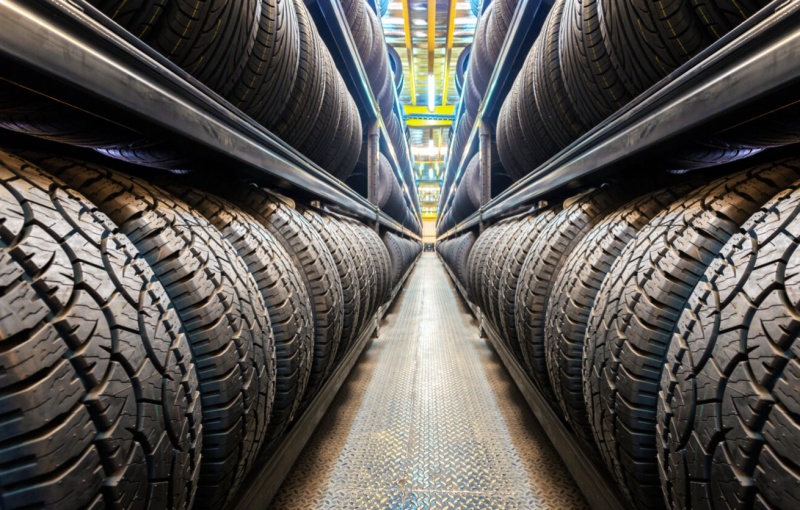
Healthy tires give you greater surface traction, allowing you to corner and maneuver easily at speed. Tires wear down naturally as time passes, which causes them to become less flexible and cracks can develop. Weather conditions, undiagnosed mechanical issues, and even sunlight can also weaken your tires. As your Toyota dealership, we’d like you to know a few signs that it’s time to visit us for new tires.
Time for New Tires? Visit Your Toyota Dealership Today
Cupped Tires
Cupping is a strange tire wear pattern that appears as deep indents at regular intervals around the tire edges. The indents look almost as if the tire has been scooped out by something. This wear damage is caused by faulty wheel alignment or a suspension problem. In either case, sections of the tires hit the ground harder than they should, causing their odd appearance.
We’ll examine your Toyota and determine the cause of the damage, If the wheel alignment is incorrect, we’ll connect your car’s wheels to our alignment machine. This computer makes a series of adjustments to each wheel to restore its correct alignment. If the suspension is the problem, we’ll test your shocks and struts and repair or replace them depending on the situation.
Visible Tread Wear Bars
Tread wear bars are raised tire sections that run horizontally through the tread, which is the raised section of a tire that’s in contact with the ground. They’re invisible on a healthy tire, but they will slowly appear as the tread wears down due to friction with the surface. If you notice these lines, visit our service department and our technicians will examine your tires.
If the wear bars are almost level with the tread, your tread has dropped to approximately 2/32″ thick, the minimum tread level safe to drive on. We can fix this problem by replacing and balancing any worn tires.
Sidewall Damage
The sidewall is the section of a tire perpendicular to the ground and faces outwards. The sidewalls can’t suffer friction damage, so they’re made of a softer rubber that provides added tire flexibility. These tire sections also lack the steel and polymer bands that reinforce the tread. Despite their safer position, a sidewall can still get damaged.
The most common form of sidewall damage is a tire bulge. A tire bulge is usually formed when part of the sidewall is pinched against a hard object, like the curb. It can also be due to the breakdown of part of the tire’s internal structure. A tire bulge is dangerous, as it stretches the rubber and can cause a blowout. We can’t repair a bulge, but we can replace the tire.
Don’t risk driving on a worn or damaged tire. Visit us today at Pedersen Toyota in Fort Collins, CO.
Connect with us


- 2024 Fuel Efficient Cars
- 2024 Fuel Efficient Sedans
- 2024 Fuel Efficient SUV
- 2024 Off-Roading SUV
- 2024 Toyota 4Runner
- 2024 Toyota bZ4X
- 2024 Toyota Camry
- 2024 Toyota Camry Hybrid
- 2024 Toyota Corolla
- 2024 Toyota Corolla Cross
- 2024 Toyota Corolla Cross Hybrid
- 2024 Toyota Corolla Hatchback
- 2024 Toyota Crossover SUV
- 2024 Toyota GR Corolla
- 2024 Toyota Grand Highlander
- 2024 Toyota Grand Highlander Hybrid
- 2024 Toyota Highlander
- 2024 Toyota Highlander Hybrid
- 2024 Toyota RAV4 Hybrid
- 2024 Toyota RAV4 Prime
- 2024 Toyota Safety Systems
- 2024 Toyota Safety Technology
- 2024 Toyota Sequoia
- 2024 Toyota Venza
- 3-Row Toyota SUV
- Benefits of Toyota OEM Parts
- Best Off-Roading Vehicles
- Best Toyota Family SUV
- Fort Collins Alternator Repair
- Fort Collins Auto Loan
- Fort Collins Car Battery
- Fort Collins Car Loan
- Fort Collins Hybrid Sedan
- Fort Collins New Car
- Fort Collins New Hatchback
- Fort Collins New SUV
- Fort Collins New Tires
- Fort Collins New Toyota
- Fort Collins OEM Tires
- Fort Collins Oil Change
- Fort Collins Tire Repair
- Fort Collins Tire Shop
- Fort Collins Toyota 4Runner
- Fort Collins Toyota Alternator
- Fort Collins Toyota Battery Replacement
- Fort Collins Toyota Battery Service
- Fort Collins Toyota Camry
- Fort Collins Toyota Camry Hybrid
- Fort Collins Toyota Corolla
- Fort Collins Toyota Corolla Cross
- Fort Collins Toyota Corolla Hatchback
- Fort Collins Toyota Dealer
- Fort Collins Toyota Dealership
- Fort Collins Toyota GR Corolla
- Fort Collins Toyota Grand Highlander
- Fort Collins Toyota Grand Highlander Hybrid
- Fort Collins Toyota Highlander Hybrid
- Fort Collins Toyota Hybrid SUV
- Fort Collins Toyota Loan
- Fort Collins Toyota OEM Parts
- Fort Collins Toyota Oil Change
- Fort Collins Toyota RAV4 Prime
- Fort Collins Toyota Sequoia
- Fort Collins Toyota Service
- Fort Collins Toyota Tires
- Fort Collins Toyota Venza
- Fort Collins Used Cars
- Fort Collins, CO Brake Repair
- Fort Collins, CO Brake Replacement
- Fort Collins, CO Finance
- Fort Collins, CO Toyota Brakes
- Fort Collins, CO Toyota bZ4X
- Fort Collins, CO Toyota Grand Highlander Hybrid
- Fort Collins, CO Toyota Highlander
- Fort Collins, CO Toyota Maintenance
- Fuel Efficient Toyota
- Fuel Efficient Toyota SUV
- Large Toyota SUV
- New Compact Cars
- New Hybrid Toyota SUV
- New Toyota 4Runner
- New Toyota bZ4X
- New Toyota Camry
- New Toyota Camry Hybrid
- New Toyota Corolla
- New Toyota Corolla Cross
- New Toyota Corolla Cross Hybrid
- New Toyota Corolla Hatchback
- New Toyota GR Corolla
- New Toyota Grand Highlander
- New Toyota Grand Highlander Hybrid
- New Toyota Hatchback
- New Toyota Highlander
- New Toyota Highlander Hybrid
- New Toyota Hybrid
- New Toyota RAV4 Hybrid
- New Toyota RAV4 Prime
- New Toyota Safety Systems
- New Toyota Sequoia
- New Toyota Venza
- Off-Road Toyota
- Pedersen Toyota
- Pedersen Toyota Finance
- Pedersen Toyota Service
- Rugged SUV
- Signs you Toyota needs a brake repair
- Signs your Toyota needs a new battery
- Spacious Toyota SUVs
- Suggested Toyota Maintenance
- Toyota 4-Wheel Drive
- Toyota Alternator
- Toyota Alternator Repair
- Toyota Battery
- Toyota Brakes
- Toyota Compact Cars
- Toyota Hybrid SUV
- Toyota Maintenance
- Toyota OEM Parts
- Toyota Oil Change
- Toyota RAV4 Hybrid Fort Collins, CO
- Toyota Safety Systems
- Toyota Sequoia Fort Collins, CO
- Toyota Tires
- Used Toyota Battery